Classy and elegant ceilings for a home that reflects your style… Stainless and glass Railings with concrete or wooden steps and with stainless or wooden handles…
Email us at topcebucontractors1@gmail.com or text us at +639214275469 SMS or WhatsApp or Please fill out the form below and we will be in touch as soon as humanly possible…
We provide finely finished interior, exterior, and energy efficient modern homes. The team is borne out of customers’ need for fine finishes. When a regular contractor finishes a house, it is common scene to find …
If you’re building a home in the Philippines—especially in the hotter areas of the country like Cebu, Iloilo, Bohol, and most southern areas of the country, comes with a major challenge: the heat. Most traditional …
The footing in an ICF build is a continuous footing since the entire wall of an ICF build is a load bearing wall that needs to be continuously supported. For a 2-3 story ICF house …
Here now is the answer to make cooler homes. Westerners mostly Canadians and Americans who like to have a vacation home or retirement home in the Philippines can now enjoy our tropical climate in their …
Black and brown are great contrasts to achieve a very elegant modern exterior. Using wood panels for the brown contrast gives it a very rustic effect, while a plain brown or light brown contrast matched …
How about having your own water treatment right at your roof top so you don’t need to buy outside and you can assure your water is the cleanest since you directly maintain your water purification. …
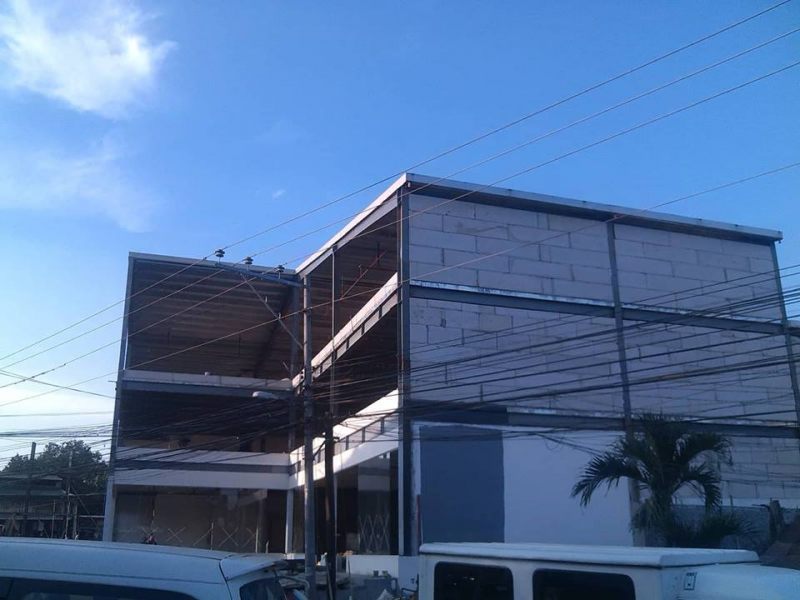
This 3 level commercial structure owned by the kindest couple in the Medellin area is designed to give budding businesses in this northern part of Cebu a good start on their business. The location is …
In the traditional way of constructing homes and buildings, people have relied in the hollow blocks for decades now until something new came along – the pre cast walls. The main advantage of pre cast …
Metal doors have been around a while yet most builders and home owners still prefer the traditional wooden doors despite it being more expensive compared to metal doors. Here’s a few reasons why most builders …
Renovating a church requires a lot of scaffolds since most big churches such as catholic churches have very high ceilings. You need to secure your workers when they work – thus you need a lot …
This parish office building (pastoral building) in San Pedro Calungsod Parish in Sogod Cebu is a fully donations funded structure and will be the first formal office structure for this parish. Currently, the business office …
When it comes to constructing houses and building structures, ensuring strength, durability, and stability is of paramount importance. One essential component that plays a significant role in achieving these qualities is the versatile I-beam. Let’s …
Helping charity is a way of giving back to the community. One afternoon, two years ago, as I was strolling at Ayala Mall, a volunteer for Save the Children introduced me to their cause. Save …
The following steps in securing your building permit could take days or even weeks or months depending on the city or municipality you are in. The fees also vary. Step 1 – Secure and Fill …
This project owned by Ronnie Francisco at Parkplace Pueblo de Oro in Babag Lapulapu city is a good example of an elegant yet affordable residential upgrade project. Newly finished projects in this subdivision is far …
There is a boom in the Cebu construction scene and construction companies, engineers, and construction workers are having a great time. Despite the steady flow of contracts and projects, there are even more of these …
Designing your house nowadays comes with a hefty price especially if you go directly to an architect and sometimes even just a civil or structural engineer. Architects usually charge around 5-7% of your project so …
In today’s world of commercial sophistication and increased opportunities for the Filipinos, and as long as you have a qualified income stream, funding your house construction is no longer an impossible dream. Your contractor should …
Building a school is so much easier than building a house since the former does not require meticulous floor planning than the latter. The same floor plan can be applied for almost all floors except …
Unlike the power you get from VECO, MECO, CEBECO, MERALCO, etc, solar power from the sun does not come with a monthly electric bill… While it is true that it may cost a small fortune …
Mall carts may be just a small project with very little revenue for the contractor but there are hundreds of small cart business owners out there. Unlike the big new house build projects, cart construction requires …
It takes a highly skilled set of workers to be able to take on renovations. While the regular contractors usually shy away from renovations because it is usually very complicated, difficult, and sometimes even prone …
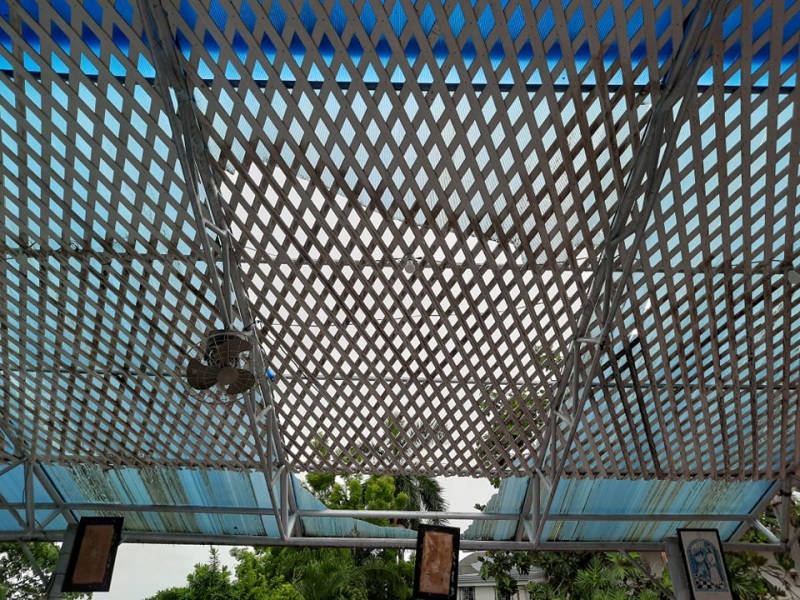
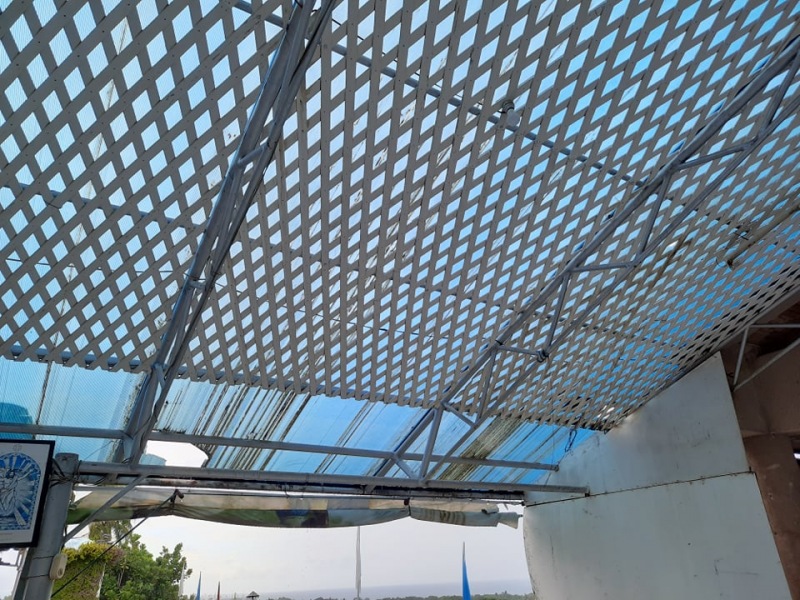
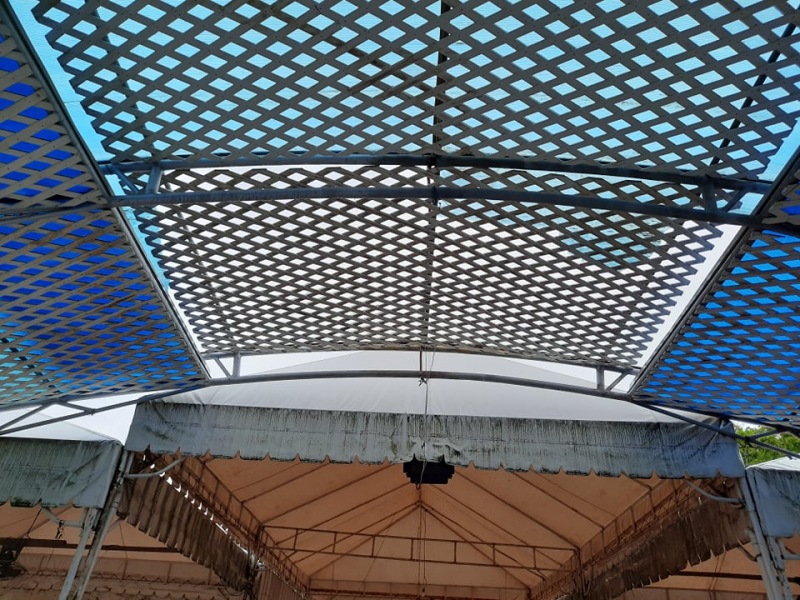
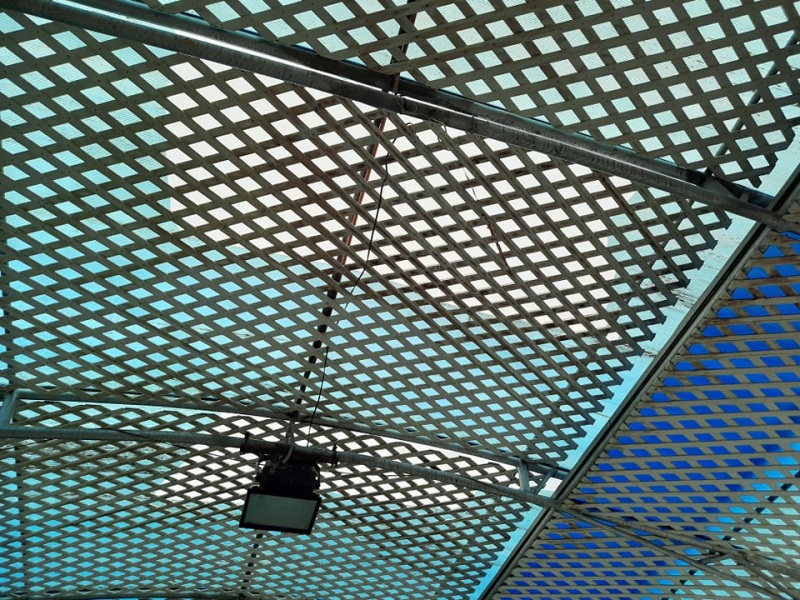
All you poly carbonate lovers out there – it looks beautiful and stunning when new with its sharp and bright color looking great as a roof for parking, prayer shacks, over pass, or canopies, but it gets ugly and breaks and even falls apart over time in just about 3-5 years – depending on weather conditions…
The most popular color is blue or transparent white and it is used mostly for canopies and parking sheds as it is light and makes less sound during rains, but its no match against the extreme power of the sun that breaks and consumes just about most things plastic. Let’s face it, poly carbonate is plastic based that’s why its less noisy when it rains compared to metal roofing, yet its more costly per sheet.
Builders and building owners usually prefer poly carbonate over metal roofing due to its beauty thus it was very popular 5-7 years ago, while not that everyone has seen its nasty side when it breaks and falls apart over time…
Another major attraction of the poly carbonate roofing is that it enables light to come through thus saving you some money on lighting costs…
Its popularity is steadily declining now. We hope its price decline would continue in the coming days so more people could use it and enjoy its beauty but just keep in mind that if ever it gets cheaper, it might still come out as expensive in the long run as you will have to replace it in 3-5 years depending on how hot the sun gets in your area… We’ll sometimes we don’t mind replacing it in 3-5 years as long as we can enjoy its beauty today…
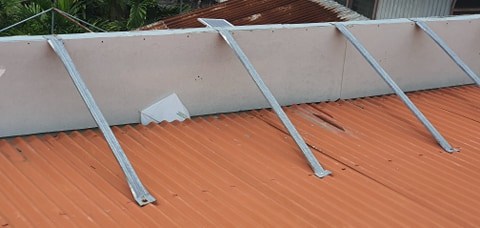
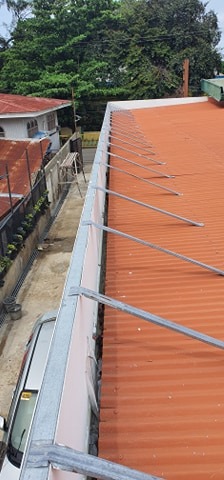
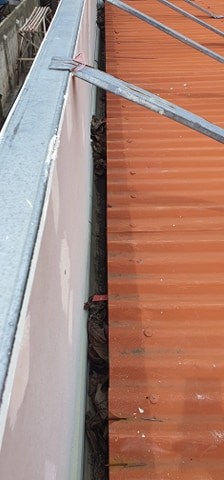
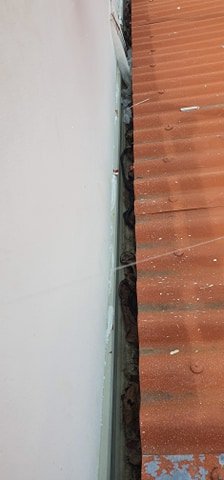
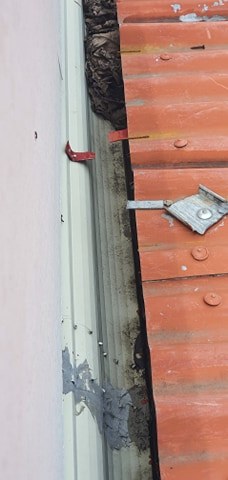
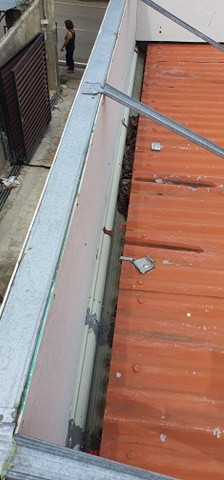
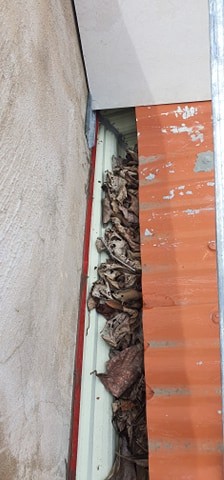
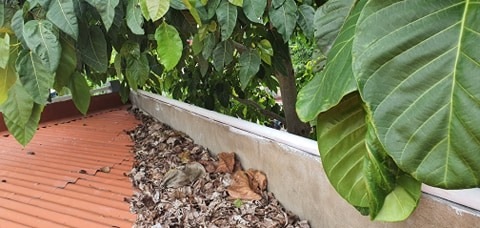
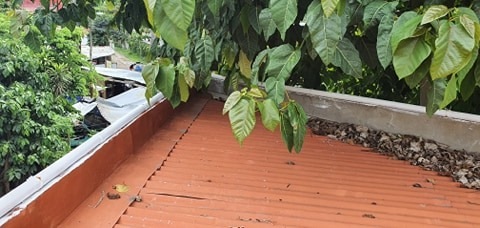
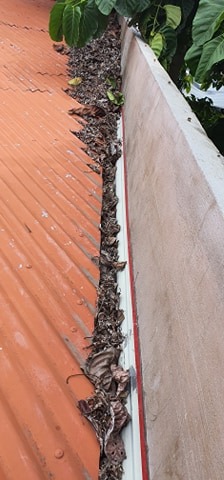
Parapet is beautiful as it hides your roof edge but debris and dead leaves get stuck in the parapet walls and gutters so fast…
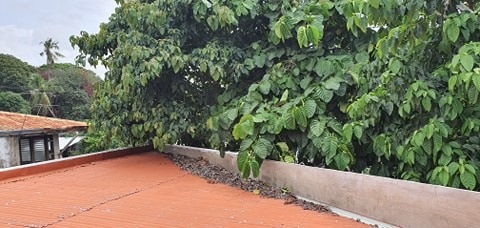
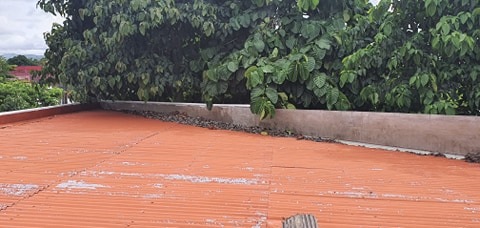
With a parapet roof design people would even wonder where your roof go or how you keep the rainwater flowing as it hides your roof edge and gutter. Parapet and gutters really make your building beautiful but all sorts of debris and dead leaves if there are trees around can easily gather in the parapet walls acting as leaf and debris catcher then immediately clogging up your gutters and blocking water passage towards your downspouts and causing serious harm to ceiling and building occupants.
To keep your beautiful building design you will have to have someone regularly cleaning up your gutters removing debris and dead leaves to prevent clogging, or if you can, better yet trim the trees or cut them, but if you don’t own the trees, more work is needed. If the trees belong to your neighbors, then you will have to place a net around your roof to easily prevent leaves and debris from clogging your gutters, but then eventually the net could rot without you knowing then your back to water seepage on your ceilings again.
When you get tired of regularly cleaning your gutters and debris and or dead leaves, you might want to opt for a free flowing roof with no gutters, but you could also destroy your concrete pavement over time as rain water can cause holes on your concrete pavement, and a free flowing roof with no gutter is sometimes even illegal in come localities – best to check your local ordinances for acceptable roof designs. Sometimes you will want to decide which is easier for you – regularly cleaning up your gutter or fixing a holed concrete pavement?
Rain water does not easily break your concrete pavement. It will take about 3 years for rain water to cause holes in your concrete pavement, and cleaning your gutter takes a weekly routine. Thus you might want to decide that having a free flowing roof design is cheaper to maintain than having to pay someone to regularly clear your gutters. Besides, having someone regularly climb up your roof could also cause damage on your roofing.
Back to the clogged gutters, hopefully the leaves have not gone down to your downspouts. If your downspouts are connected directly to an embedded or buried drainage, more work might be required. To avoid having to dig your drainage, you can simply cut the wall downspout and condemn your buried drainage way to remove the clogged debris and then you will have to content with an open downspout spilling directly on your driveway…
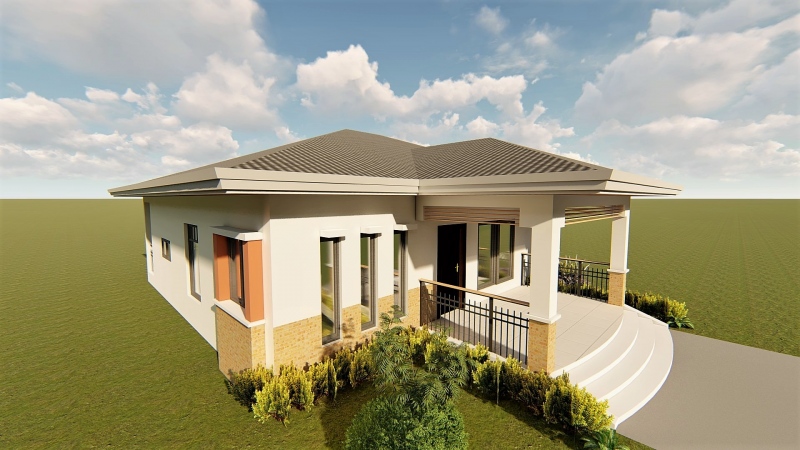
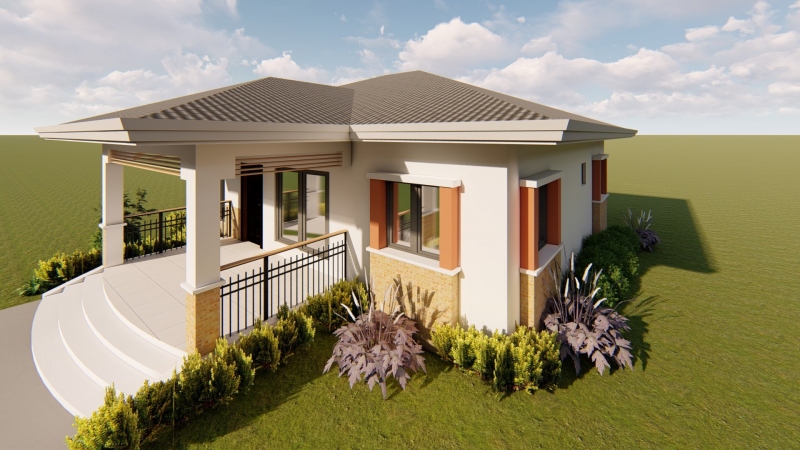
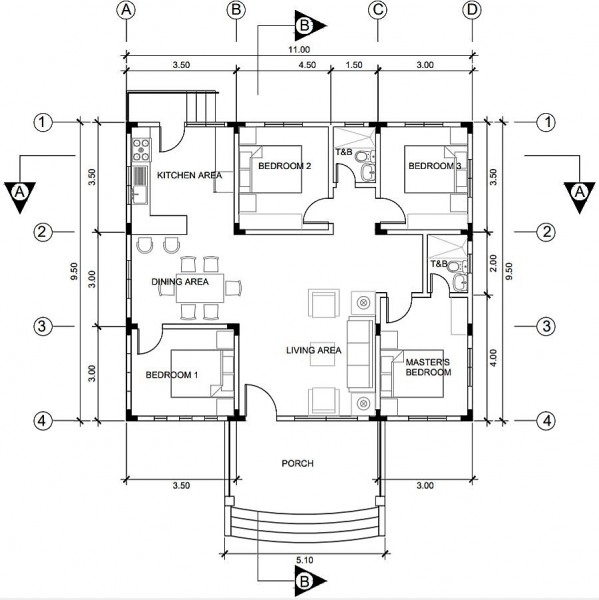
This 120 square meter bungalow sits on a very large lot of about 2000 square meter. Because of its generous space allocation, it has 4 standard sized bedrooms, a relatively large living room, and a medium sized kitchen with back entrance to possible dirty kitchen or barbecue area on the rear.
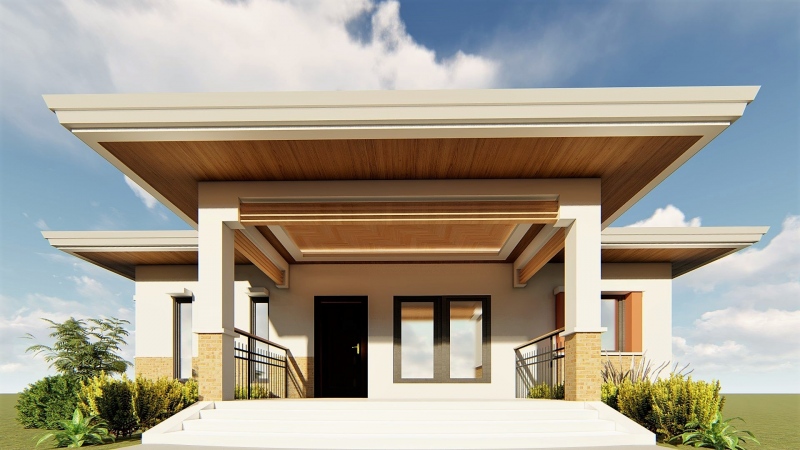
The house shape is the usual rectangle following the cubist design of most modern home designs. The porch area is so designed to give it an imperial look so that you can come in like a king. The ceiling height at 2.75 meters or 9 feet makes the house even more spacious with more headroom for taller people to move around is not the usual minimum height of 2.5 meters.
The porch side / front side is not facing east like others’ practice of letting the golden rays of the sun come in directly but instead it faces the opposite direction to the west which is the west Philippine sea as the lot is actually near the beach, so instead of the sun greeting the house every morning, the magnificent view of the sea and its delicious breeze greet you every morning if you’re a guest of this house. Imagine the sunset you will be enjoying every afternoon in this house.
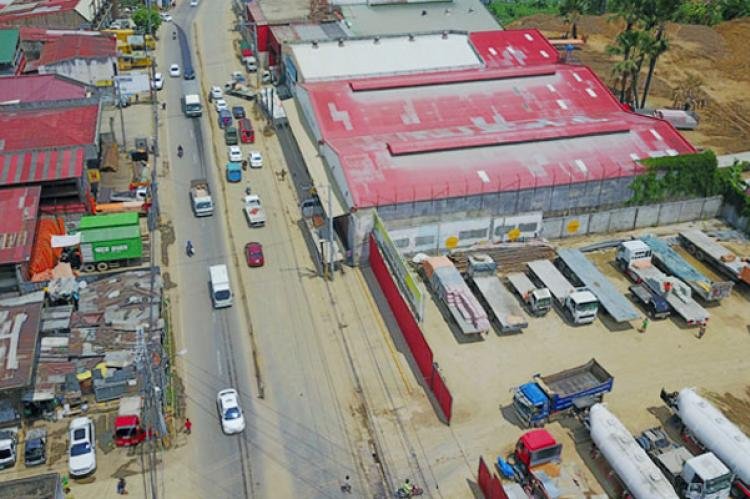
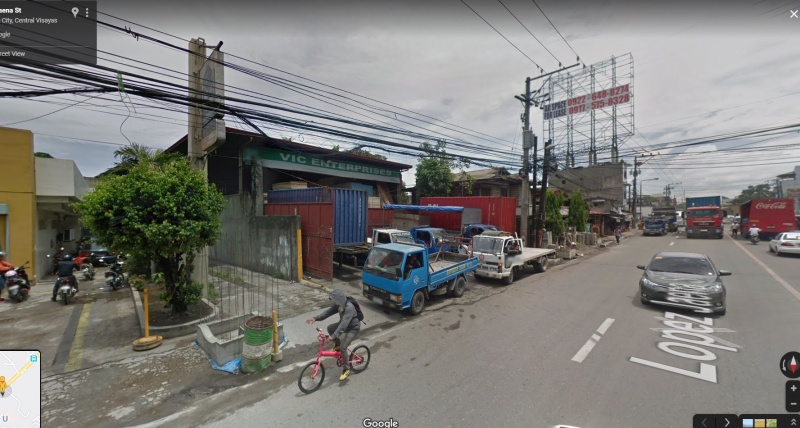
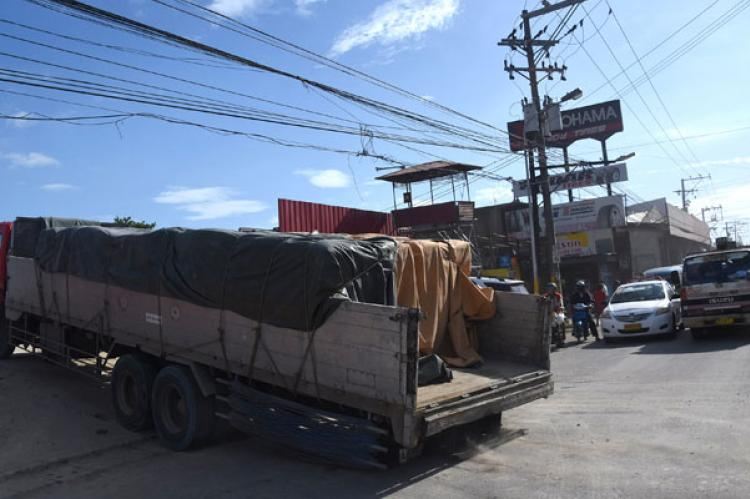
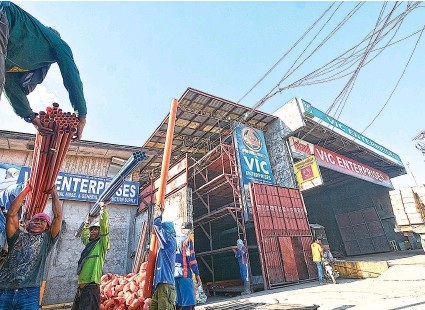
Getting the materials for your project can be a daunting task especially if you’re not hiring your own driver to try to save operation cost or don’t even have a truck to avoid hiring a driver. Since you don’t really need a big truck everyday – how about you just use your supplier’s truck to deliver the materials on site for an additional fee – but the suppliers’ truck is not really always available as in the case when your supplier is a really large hardware like Vic Enterprises. Recently Vic Enterprises are focusing on the hardware retailers so they can supply the materials to them in “bulk” – we mean 16-wheeler articulated trailer truck type of “bulk”.
Vic is trying to focus on the retailer hardware for ease in logistics as small deliveries will just add to their already massive fleet of deliveries, so if your materials volume is not the 16-wheeler articulated trailer type of volume, Vic Enterprises wants you to bring your own truck to their warehouse and haul the materials yourself. Now if your trying to save on your cost by not hiring your own driver or maintaining your own truck, some entrepreneurial minded truck owners have come up with a solution for you. They are now on stand by at the new Vic Enterprises outlet in Tipolo Mandaue waiting for you to charter their truck and driver. Now this is a really smart solution if you don’t have your own truck or fleet. They charge minimal and you only pay as you go – or as you need them.
Now you can get your materials cheap and affordable like Vic Enterprises pricing without having to maintain your own truck or driver.
You need a building permit for your structure because without it you cannot apply for electrical connection and water connection as they usually require it, and the Office of the Building Official (OBO) – the agency tasked to enforce the building permit – can also issue a violation against you, and they can even order a cease construction order, or worse a demolition.
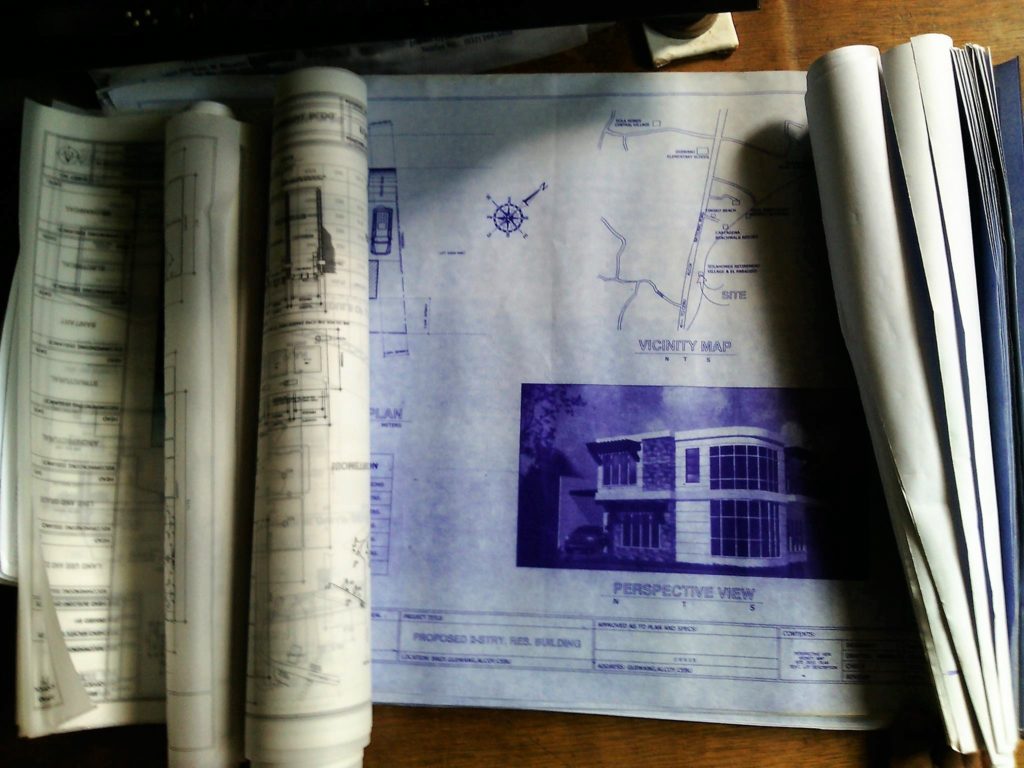
building blueprints
Here are the usual requirements for the building permit application:
I. BARANGGAY CONSTRUCTION PERMIT. The baranggay level of government also has their own baranggay level ordinances and they need to check if your building and location is a suitable location for construction. They also need to check if you comply with the baranggay level ordinance on drainage and they also need to inform you of their garbage disposal procedures. They usually want to see a copy of your architectural blueprint, lot title, lot sketch plan, and the detailed bill of materials. Most baranggays have a flat permit fee which ranges from 800 pesos to as high as 5,000 like Baranggay Bankal in Lapu-lapu City – most expensive baranggay we know for securing a baranggay construction permit.
II. TAX CLEARANCE. You need to secure a tax clearance at the city or municipal assessor for that current year that you are filing application for building permit – which means you will need to pay the estate tax for that current year in advance. The tax clearance fee is only around 150 pesos to 350 pesos. The assessor will usually want to see a copy of your lot title, lot sketch plan, and an updated certified true copy of your tax declaration which you can secure from the same office.
III. CERTIFIED TRUE COPY OF YOUR LOT TITLE. You can obtain a copy of your lot title from your local registry of deeds from your local bureau of lands. The fee for obtaining a certified true copy of your title ranges from 278 pesos to 298 pesos per copy. They will usually want to see a copy of your tax declaration. Note that if your lot title is still under the previous owner’s name, the OBO (Office of the Building Official) will also need to see a copy of your Deed of Sale for that lot, and you will need to have the previous owner sign the consent section in the building permit application form.
IV. LATEST CERTIFIED TRUE COPY OF YOUR TAX DECLARATION. Aside from the title, the OBO will require a certified true copy of your tax declaration. They usually just want to check if your tax declaration data jives with your lot title and tax clearance. The fee for a certified true copy of your tax declaration is around 80 pesos to 120 pesos depending on your location as different cities of municipalities have different tariffs for processing of documents. To secure a certified true copy of your tax declaration, the assessor will require a copy of your old tax declaration of a copy of your title.
V. LOT SKETCH PLAN. The OBO will want to see your lot sketch plan signed by a registered geodetic engineer so they can check if you are building within your lot observing the required setbacks set forth by the Philippine Building Code. The geodetic engineer will want to see a copy of your lot title. The fee for a sketch plan ranges from 5,000 to 8,000 pesos depending on your location.
VI. BUILDING METHODOLOGY and SPECIFICATIONS. The OBO will want to see if you comply with the accepted methodologies and materials set forth by the Philippine building code. Be sure to follow what you write in your building specs as this document could be used against you in a court of law if you later they find out that you did not follow what you submitted. The building specs document has to be signed and prepared by a civil engineer. This usually comes free with the designing fee.
VII. BILL OF MATERIALS. The detailed bill of materials is primarily used by the OBO as reference in determining your building permit fee. Each municipality or city has a pre-determined tariff percentage for computing the building permit fee. You can expect a higher fee for bigger cities and lower fee for rural areas.
VIII. BLUEPRINTS. You will need to submit complete sets of architectural, electrical, plumbing, structural, mechanical, and electronics blueprints. You don’t need to prepare mechanical blueprints if you do not include air conditioner and elevator in your plans. You also don’t need to submit electronics plan if you did not include data, TV, telephone, and CCTV in your plans.
VIX. COMPLETELY FILLED OUT BUILDING, ELECTRICAL, PLUMBING, MECHANICAL, ELECTRICAL, ELECTRONICS, and ENDORSEMENT forms. You can get these forms at the Office of the Building Official (OBO). Be sure to completely fill out all required fields in the forms. Your engineers – civil, structural, electrical, plumbing, mechanical (if applicable), and electronics (if applicable) will also need to sign and seal these forms.
Different cities and municipalities – depending on your construction location might have additional requirements such as in Medellin of Cebu which requires an HLURB (Housing and Land Use Regulatory Board) clearance for lots located within subdivision lots. The HLURB fee ranges from 9,000 to 10,000 pesos. It is surprising to note though that other municipalities such as Consolacion did not require the HLURB clearance for a subdivision location. Additionally, some places like Medellin also require a DPWH clearance to make sure your structure is outside their no build zone which is usually 10-15 meters away from the middle of the highway.
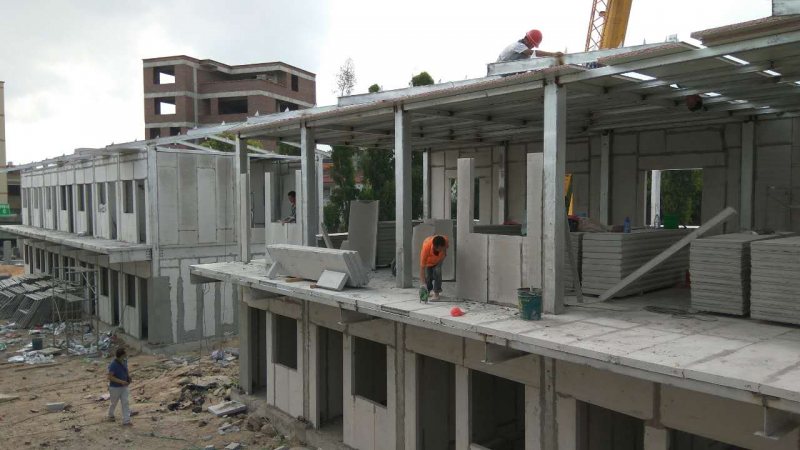
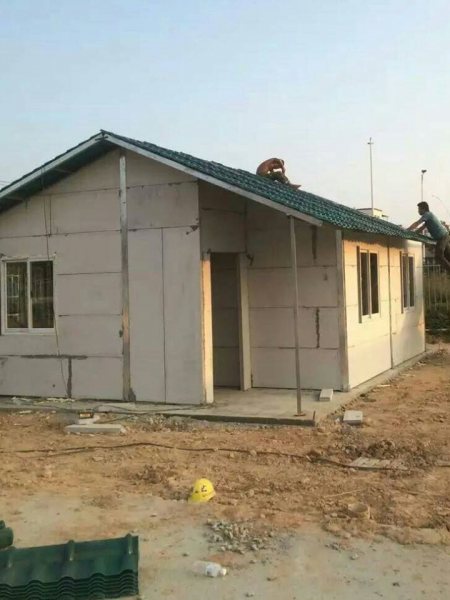
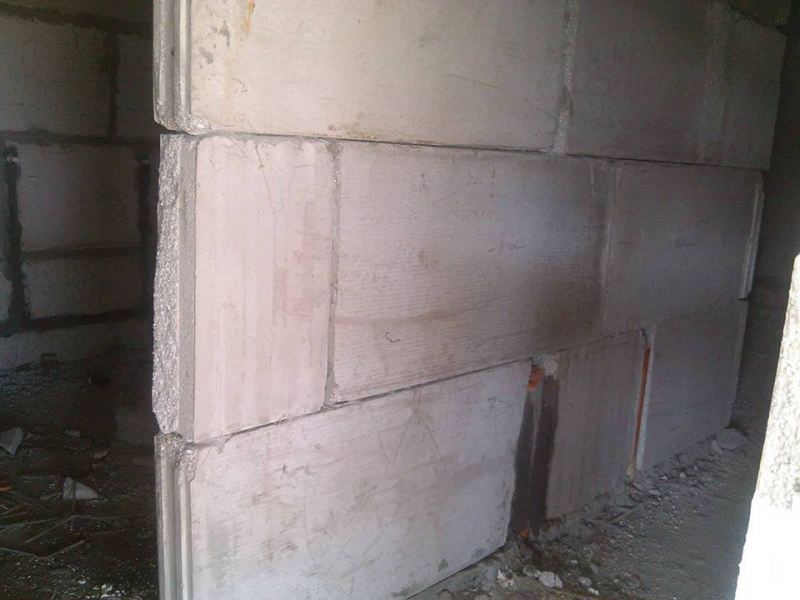
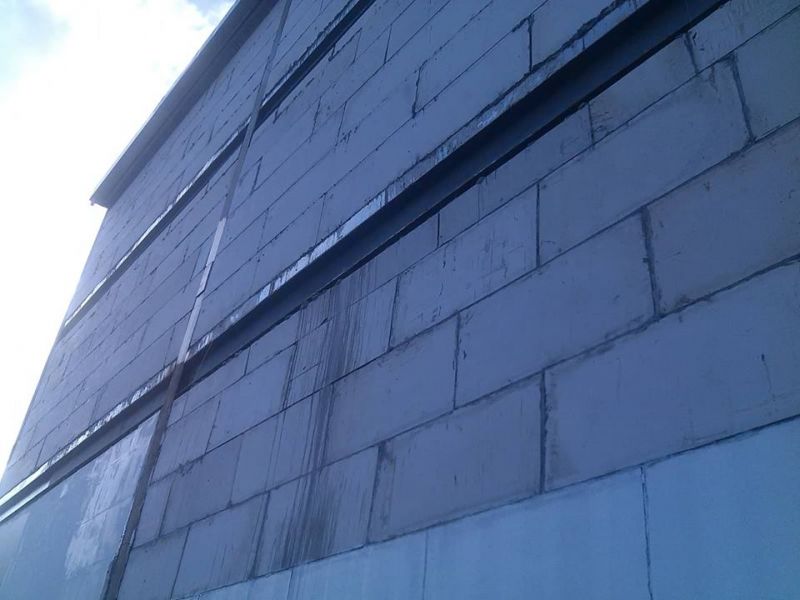
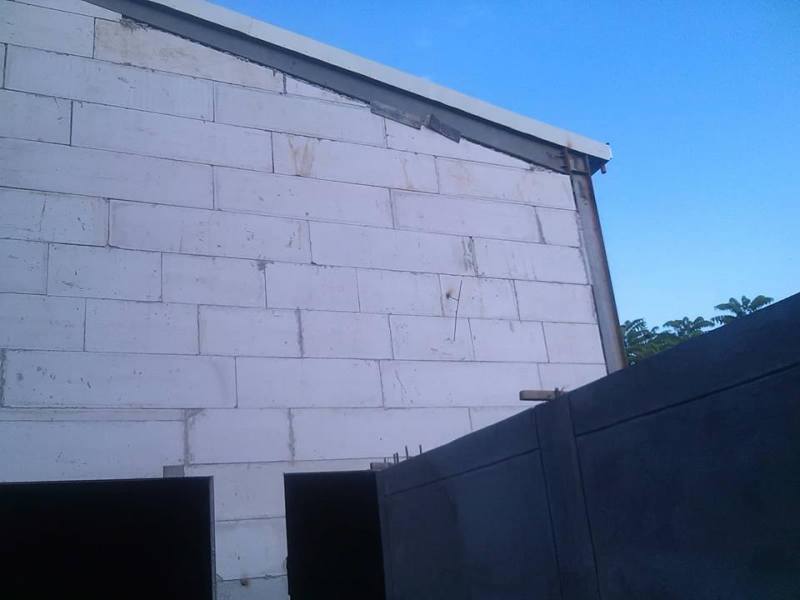
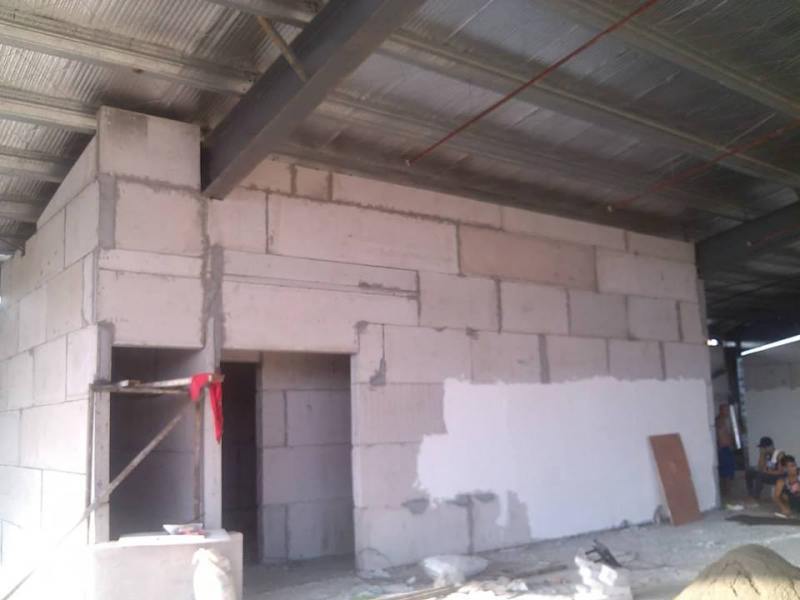
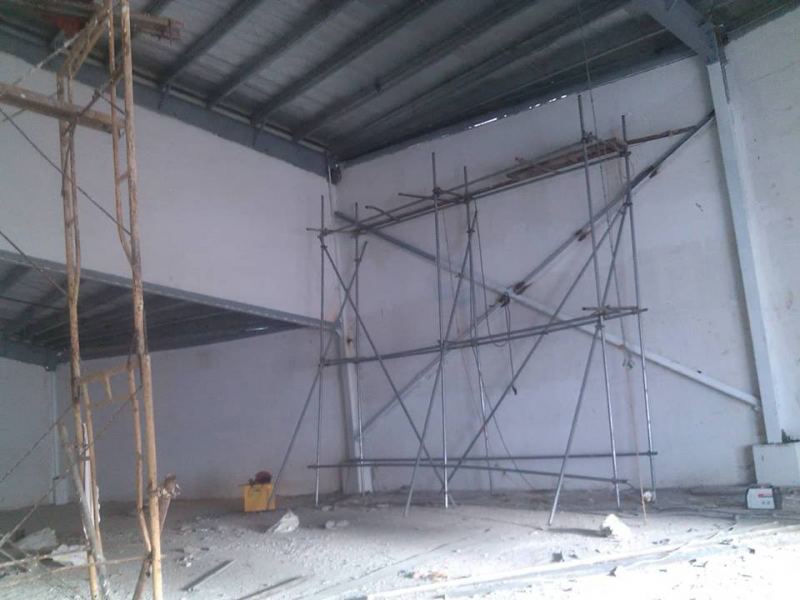
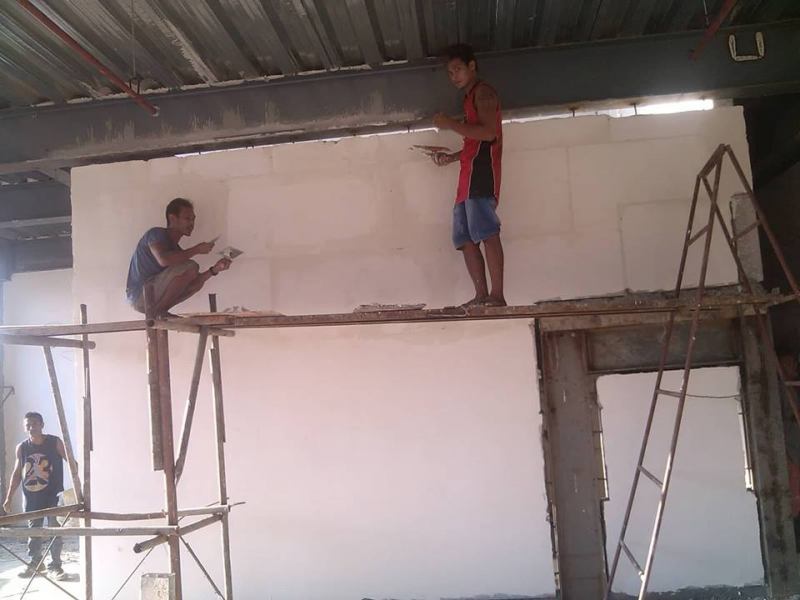
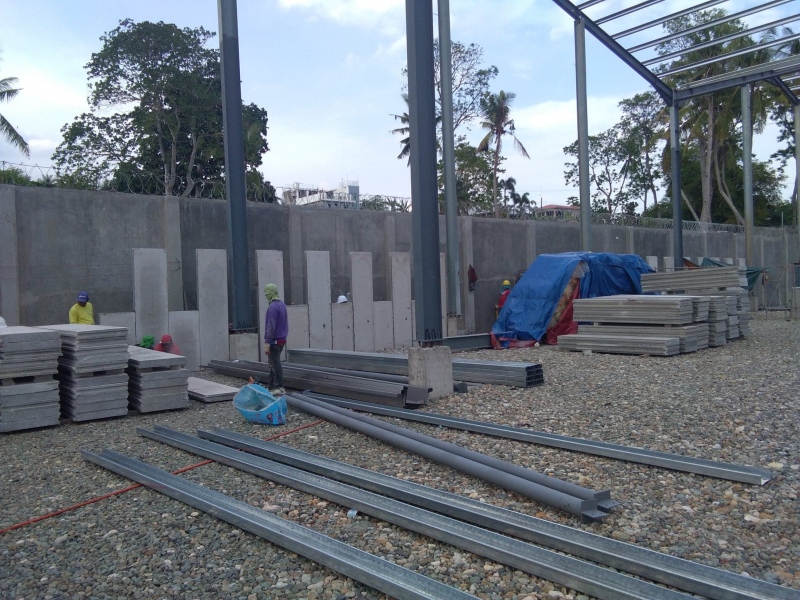
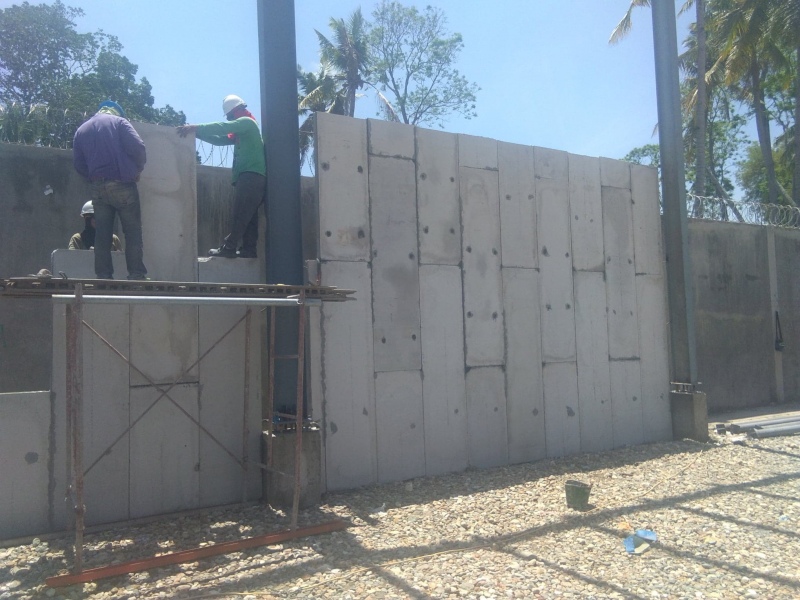
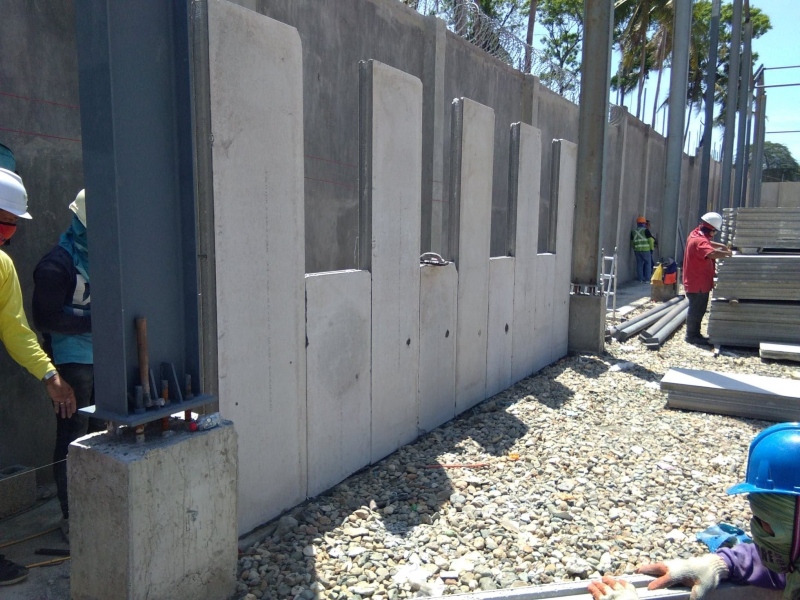
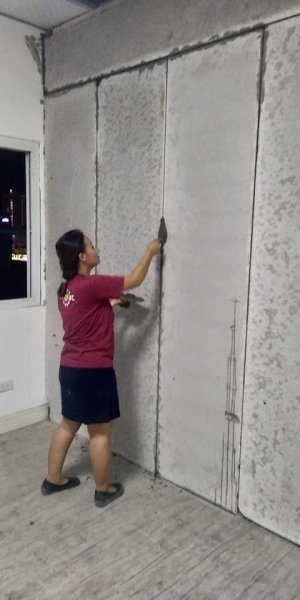
If you’re looking to save on the cost of your structure – you can reduce the cost of labor by using pre-fabricated (pre-fab) walls that is still concrete based but light weight, thermally efficient, fire resistant, and acoustically effective.
Pre-fab / pre-cast walls have recently gained popularity due to its ease of use (installation), and labor cost efficiency.
The city of Cebu’s COVID shelter – a fast response make shift hospital is using this pre-fab type of wall thru pre-fab walls.
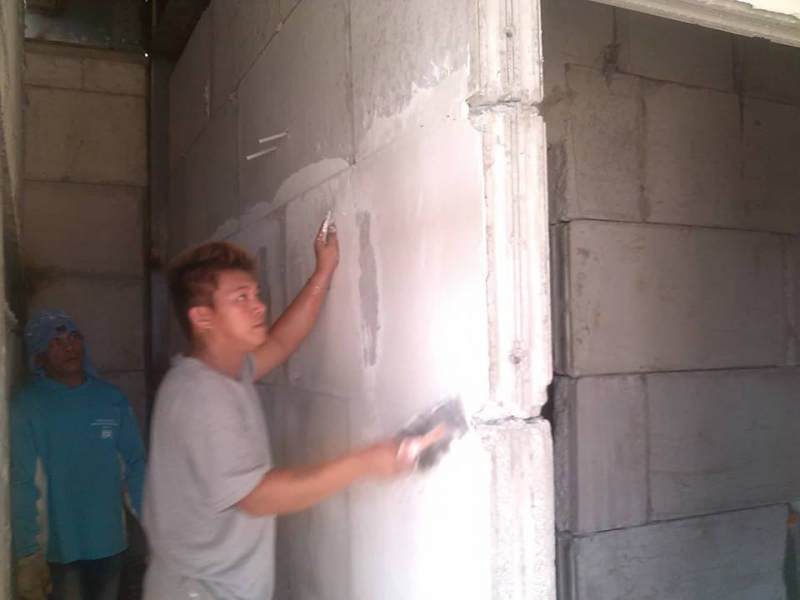
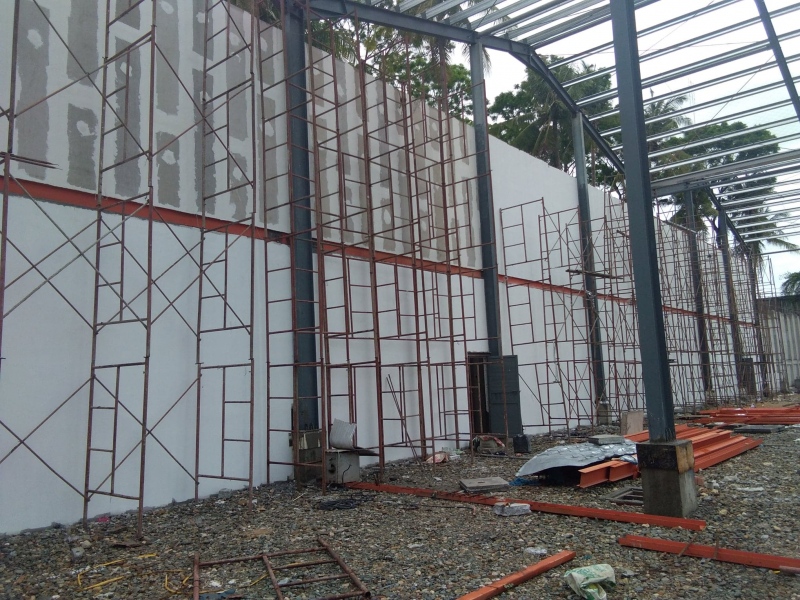
So instead of piling, hollow blocks, filling it with cement, then plastering it with concrete paste, you simply have to install these wide cut prefab walls – thus cutting your labor cost and speeding up your construction time up to 5-10 times faster.
Despite it being relatively more costly compared to hollow blocks you will be able to save a lot on your labor cost since you no longer need to apply plaster on the walls – rather just paint right away. You only need to patch the corners then apply the finishing paint directly.
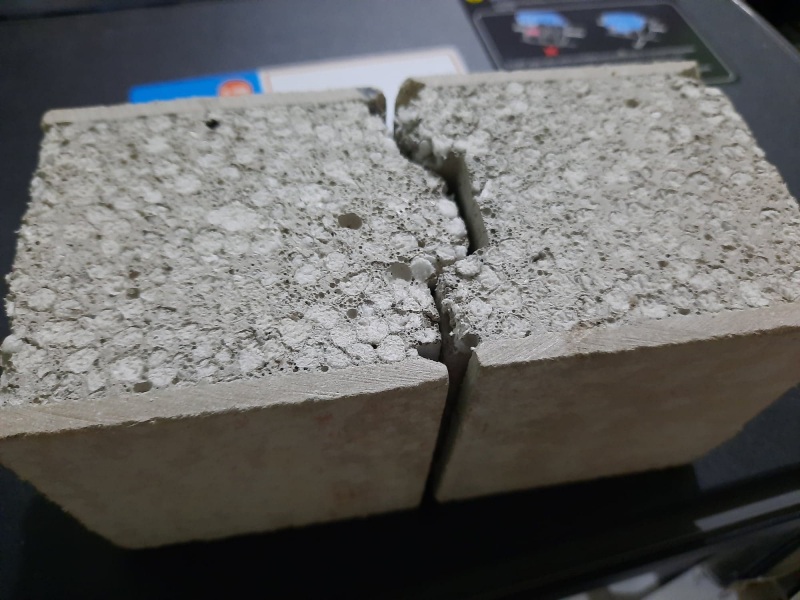
These pre-cast walls are made of concrete, fibers, ash and / or coal powder, and expanded Polystyrene (EPS) foam granules – sandwiched by waterproof and flexible smoothened fiber cement board on both surfaces.
The pre-fab wall passes all required engineering and building code standards please see table as follows:
PROPERTIES / DESCRIPTION
NATIONAL STANDARD
TESTING INDEX
Anti-Impact Rating (Times)
75mm
≥5
90mm
≥5
120mm
≥5
75mm
≥8
90mm
≥10
120mm
≥15
Anti-bending Load Rating Load (Times Over)
≥1.5
≥1.5
≥1.5
≥3
≥4
≥5
Compressive Strength (MPa)
≥3.5
≥3.5
≥3.5
≥5
≥5
≥5
Softening Coefficient
≥0.80
≥0.80
≥0.80
≥1
≥1
≥1
Surface Density
≤70
≤90
≤110
≤55
≤70
≤85
Moisture Rate (%)
≤12
≤10
≤8
≤10
≤9
≤7
Drying Shrinkage Value (mm/m)
≤0.6
≤0.6
≤0.6
≤0.45
≤0.5
≤0.5
Drying Shrinkage Value (N/mm/m)
≥1000
≥1000
≥1000
≥1200
≥1300
≥1500
Sound Insulation Rating in the air (dB)
≥30
≥35
≥40
≥35
≥40
≥45
Fireproof rating (h)
≥1
≥1
≥1
≥2.5
≥3
≥4
Heat transfer coefficient (b/w/m2)
≤1.0
≤1.0
Radioactivity Limit (solid boards)
≤1
≤1
≤1
≤1
≤1
≤1
Inner radiation indexes
≤1
≤1
≤1
≤1
≤1
≤1
Outer radiation indexes
≤1
≤1
≤1
≤1
≤1
≤1
Also, because the thickest wall is only 12 centimeters, and since you no longer need to apply finishing plaster, compared to hollow blocks that could go as thick as 6 inches including the finishing plaster, this pre-fab composite wall can give you up to 4.2% living space compared to traditional hollow blocks.
Composite pre-fab wall is now our preferred walling system:
EASY TO INSTALL – The tongue and groove design reduces installation time and decreases labor costs. The Electrical, plumbing installations, and other finishing touches can be done 5 – 10 times faster than when done on the traditional hollow blocks wall.
FIRE RETARDANT – Tested to withstand up to 1,000˚C for 120 minutes and is compliant to the standard for Grade A Fireproof Material.
REDUCES NOISE: – The Expanded Polystyrene (EPS) foam granules is widely known in the construction industry as good noise reducer.
SEISMIC RESILIENT. EPS – the foam granules is highly flexible. Combined with fiber cement makes for a highly flexible yet sturdy wall that resists bending due to seismic activity.
STRUCTURALLY AND ECONOMICAL EFFICIENT. The composite wall is made up of light materials and are 1/6th the weight of normal 120mm thick brick walls yet 60% lighter than traditional hollow blocks. This makes for a light weight wall that reduces beam and slab load which means significant cost reduction on the structural frame. The pre-cast panels are also moisture proof, water resistant, yet ready for painting right after installation (Must use recommended sealants and adhesives).
THERMALLY EFFICIENT AND ENVIRONMENT FRIENDLY. As per tests, the composite pre-cast wall is thermally efficient in heat absorption and dissipation due to the high density of EPS and the rest of the high-density composite materials used. The EPS foam granules is the same material used in cooler chests / portable ice chests. This results in a cooler room which means you don’t need to use air conditioning as much as you do – thus saving the environment and your pocket.
Our precast walls come in 8 x 2 feet sizes in 7.5, 9.0, and 12 centimeter thickness.
Hello, I introduce myself, I am John Doe. We have a plot of 300 SQM on the island of Siargao. We would like to build a BUILDING on this site. In order to confirm our budget and to start the construction, we would need to establish a construction quote.
You will find in attached the details in PDF of the contruction and volumes.
The project consist in 4 shops (6m x 8.5m) and one roof top (24m x 10).
We want an estimate containing:
Construction (concrete, iron, etc.) raw ready to receive ceramic or paint. (fittings, ceramic, doors, etc. not included)
5 electric meters (1 per shop and 1 for the roof top)
Location for electrical cables (electrical outlets, lights, aircon, fan etc.)
one clean water supply per pitch (total 5)
provide a system for wastewater (common or individual)
building permit (by law)
All installations, clean water, waste water and electricity must meet the standards and laws in force of the Filipino government on the island of SIARGAO.
The PDF gives an idea of the project once finished but we want an estimate for the gross building + electricity + clean water + waste water.
This estimate should not take into account:
furnishing materials (wood, ceramic, paint)
toilet / sink / plumbing
closing (door / window / etc)
Cordially,
John
Sample response:
Hi John,
Here are the costing estimates:
Raw Structure/Architectural (including front pavers and side stair area) (tile ready floors, paint ready walls, with electrical and plumbing rough ins) (glass works, glass and wooden windows, and wooden facade excluded) (fittings, ceramic, doors, and other finishing items excluded)= p7.43m
Electrical works with 5 electric meters (labor and materials) (local ordinance compliant) = rough estimate p450k; Detailed costing estimates requires FULLY REFUNDABLE p2.5k estimation fee (to be refunded during start of blueprinting)
Plumbing works water and sanitary lines and septic tank (labor and materials) (local ordinance compliant)= rough estimate p250k; Detailed costing estimates requires FULLY REFUNDABLE p2.5k estimation fee (to be refunded during start of blueprinting)
Building Permit processing = FREE processing upon 5% commitment on the structure. (govt. fees excluded – to be billed later)
Blueprinting = p35k (Fully Refundable upon awarding of construction)
Site visit = p10k (Fully Refundable upon awarding of construction)
Here’s a similar project we built recently – https://finefinish.cbu.asia/seguerra-commercial-spaces-in-poblacion-talisay-city/
We accept bank to bank payments thru BDO, Unionbank, Metrobank, or moneygram.
Contractors provide project management service to save customers (project owners) from the headaches and stresses of managing a project, however some customers do look for “supervision only” services – as they’re trying to save their money and want to assume most of the project management headaches instead of giving it to a contractor. They usually try to contact a contractor and ask if they provide this kind of service – in exchange of allowing them to add that project to the contractor’s portfolio – a bigger portfolio means more future customers for contractors.
Supervision only services is indeed really very cheap and the contractor who offers such service will not earn anything from it – except for the added new project feature in the portfolio – however it is the customer who could end up spending more since the contractor/supervisor will now switch to “high quality mode” where high quality materials and sometimes even signature finishing fixtures are encouraged since the contractor’s focus now is making this specific project the ideal example project that will shine in his portfolio. The contractor will also ease on the workers and tell them to take the cruising pace to give the customer the best quality workmanship to make this project further shine in his portfolio. Longer work duration means more cost for the labor.
If the contractor is not in the supervision mode, he will naturally convince the customer to accept average quality materials and finishes to give the impression that he wants the customer to save money through good quality but averagely priced materials. If left on his own, the contractor, in the all-in packaged service, will also try to maximize profits by encouraging these good quality – but averagely priced materials. In the all-in packaged service – as opposed to – the supervision mode, the contractor will always try to pressure the workers to finish faster but still strictly observing good quality to avoid back jobs later – thus further saving him on the cost of labor – if the workers can shorten the work duration.
It is important to strike a balance between quality and affordability – and it is the customer who makes the final decision to go for supervision only, or the all-in packaged service.
At the end of the day, it is always best to use high quality finishes and encourage the workers to achieve high quality workmanship by taking the cruising pace, but this always means higher cost, and the more money you invest on your project, the higher will be its value.
Works should conform to the current National Building Code
of the Philippines, National Structural Code of the Philippines, National
Plumbing Code of the Philippines, and National Electrical Code of the
Philippines.
First off, make all formworks strong enough for all types of
load. It should be constructed efficiently – supported and horizontally and
vertically so as to retain shape and form. Joints should be proofed against
leakage and seepage. It should be strong enough to allow easy removal in pre-set
sequence without undue damage to the concrete set. Materials should be set correctly
to the accurate line and levels and it should have perfectly flat surface. It should be made of the lightest possible
materials. It is preferred that form materials should be easy to find and
should be re-usable such as phenolic boards supported by metal tubes or rods.
It should not warp, shrink, or bloat when exposed to all kinds of weather. Its
base should also be firm and solid.
When removing the formworks, start with the vertical faces
of the walls, beams, and column sides. Followed by the forming soffit of slabs,
then finally the forming soffit of beams, girders and other heavy loads.
Footings should stand and bear on undisturbed on firm
natural earth or compressed fill that can withstand supporting a design pressure
of 2,000 PSI. Foundations concrete should have a 28-day compressed strength of
3,000 PSI. Concretes that are always exposed to weather should be low density
allowing micro bubbles to 5% (+/- 1%) through an admixture that conforms to American
Society for Testing and Materials (ASTM) C-260. Concretes works should follow Association
of Construction Inspectors (ACI) 301 (Specification for Structural Concrete
Buildings). Reinforcing steels should meet ASTM A-515, Grade 60. If otherwise specified,
the following cover should be observed for reinforcements: a. Concrete cast permanently
exposed to earth – 75mm; b. Concrete exposed to earth and weather – 20mm Ø
through 36mm Ø – 50mm, 16mm Ø bars smaller – 38mm. Reinforcing marked
continuous on the plans and designs should be lap 40 x Bar diameter on splices
unless otherwise specified.
Cast-in-place Concrete mixes should meet ACI 301 – using
Portland cement that conforms to ASTM C-150 of C-595, aggregate conforms to
ASTM C-33, and admixtures conforms to ASTM C-494, C-1017, C-618, C-989 and
C-260. Ready mixed concrete should meet ASTM C-94. It should also conform to
the following strengths, slump and water/cement ratio requirements:
CONCRETE
MIN. F’c (28 days)
SLUMP
W/C RATIO
Columns, Beams
3000 PSI
2” to 4”
0.46
Canopy Slab
3000 PSI
2” to 4”
0.46
Footings
3000 PSI
2” to 4”
0.50
Slab on Grade
3000 PSI
2” to 4”
0.50
Supervising engineers may use admixture to produce easy
flowing mixture. The maximum slump should not go beyond 10 inches. The supervisor
should submit test results of the proposed concrete mixes together with the
manufacturer’s technical data before pouring. Concreting shall meet ACI 301 (Specification
for Structural Concrete Building). Rebars shall meet ASTM A-615 – Grade 60. Welding
of reinforcing metals should meet AWS D1.4. Epoxy coatings should meet ASTM
A-775. Steel reinforcements should be set and placed before pouring the concrete,
except when vertical dowels for walls reinforcers are “floated”. Do not pitch
bent bars that are partially embedded in hardened concrete unless specifically
indicated or approved. Steel reinforcers, including the hooks and bends, shall
be specified to meet with ACI. Further, steel reinforcers specified as continuous
should lap with type 2 Lap Splice unless otherwise specified. Edgings of exposed
surfaces should be cut away at a right-angle edge or corner 20mm unless
otherwise specified. Do not remove formworks until the concrete is at 90% of
its 28-day compressive strength curing.
Masonry works should meet the “Specifications for Masonry
Structures (ACI 340.0-95)” – published by the American Concrete Institute. Hollow
load-bearing masonry units should meet ASTM C-90, Grade N-1 and should be of
lightweight aggregates. Minimum prism compressive strength (f’m) should be
1,550 PSI at an age of 28 days, as set by the unit strength as per ACI 530.1.
Put grout on all bond beams and reinforced cells solidly. Grout should meet ASTM
C-475 and should be in a minimum 28-day compressive strength curing of 2,500
PSI. Steel reinforcers should meet ASTM A-615, Grade 60. Fabricated reinforcer
bars that are to be hooked or bent should Provide a minimal lap of 48 x bar diameters
on all splices unless otherwise detailed. Mortar should meet ASTM C-270, Type
S. All mortar should meet the “Proportion Specification” of ASTM C-270 and be
made with Portland Cement/ Lime (Non air-entrained). Unless otherwise set, all
walls should be laid in running bond. Put rebar dowels from foundations to
match vertical reinforcement size and spacing. Dowels must be 90º hooked and
lapped with the first lift of reinforcing. Place horizontal bond beams with
continuous reinforcers as specified. Finish all horizontal reinforcers at the control
joints except for the bond beams at the bearing elevations. Provide bond beam
lintels and brick shelf angles above all wall openings for door and windows. On
masonry reinforcements, always use 10mm Ø vertical bars spaced at 600mm O.C.
and 10mm Ø horizontal bars per 3 layers of CHB unless otherwise specified by
the structural engineer.
All Structural Steel must meet the 1994 edition of the Load
and Resistance Factor Design (L.R.F.D.) (Manual of Steel Construction) of the AISC.
When otherwise designed, all materials shall meet the following ASTM requirements:
MEMBER
ASTM
MIN. STRENGTH
Rolled Plates/Shapes
A36
36 KSI
Connection Bolts
A325
92 KSI
Anchor Bolts
A307
—
Non-shrink Grout
C1107
8000 PSI
Connections must be shear type – factory set for the
factored shear forces as per design to meet American Institute of Steel
Construction (AISC) specifications for load and resistance factors. Bolts must
be minimum of 20mm in diameter unless specified otherwise, bolts must be
shear/bearing type and “snug-tight”. Welding works must meet American Welding
Society AWS D1.1 using E70xx electrodes, unless specified otherwise. Make continuous
minimum sized fillet welds per AISC requirements. Filler materials must be a
minimum yield strength of 58 KSI. If “Continuous Chord” angles are indicated, you
must provide a continuous butt weld or full penetration weld at the splice
points. Steel fabricators may submit an alternate bolted connection detail. Holes
must be drilled or punched. Slotted holes must have smooth edges. Hole burning and
cutting of torch at the site will not be allowed. If not otherwise specified, structural
steels must be double coated with Type I (Red Oxide) Paint that meets The Society
for Protective Coatings (SSPC) 15-68. All temporary guying and bracing must be
done with structural steel erectors. Columns, anchor bolts, base plates, etc. must
be designed for the final completed condition. Steel erections for columns,
anchor bolts, base plates, must be duly designed. Protective paintings that are
damaged during transit, erecting and field welding processes must be restored on
field and must match the factory applied coatings.
Exterior walls must be plain cement finished with a
thickness of 1/2 inch. Interior walls must also be plain cement finished with a
thickness of 3/8 inch. Glazed tiles must be properly placed on specified locations
indicated in the design. Paints must be flat latex. Painted walls and columns must
be treated first with concrete neutralizers then with a primer and finished
with double coats of paint. Openings on walls must be properly sealed. Moldings,
if provided must be made as indicated in the plans and must be located
accordingly.
Flooring finishes must be as indicated in the design: a. Patio,
Service – 3000mmx300mm Unglazed Terracotta Tiles; b. Living, Dining, Kitchen
and Bedrooms – 300mmx300mm glazed ceramic tiles; c. Toilet and Baths –
300mmx300mm unglazed; d. Stairs, Roof Deck- 300mmx300mm non slip Ceramic Tiles.
Tiles must be grouted.
Ceilings must be 4’x8’x1/8” fiber cement with a first coat
of flat latex primer and finished with two coats of the same. Lighting fixtures
must be of the design specified by the architect or owner. Ceiling height must
be a minimum of 2.4m.
Panel Doors must be wood with the option of a customized or
manufactured design that is approved or chosen by the owner. Windows must be at
least made of aluminum frames customized to size by the chosen manufacturer, or
Unplasticized Polyvinyl Chloride UPVC if required by the owner. Window and door
heights must be minimum 2.10m. Window sills must be 900mm from finished floor,
kitchen window sill at 1.3m and toilet and bath window sill at 1.5m.
Plumbing lines must be concealed as much as possible. Pipes must
not be embedded in structural members unless otherwise designed or allowed. Run
all horizontal piping in perfect alignment and at uniform grade of not less
than the slope of 1:50 for sewer lines and 1:100 for drainage lines. Floor
drains must be vented individually. Cleanouts must be flush mounted to wall and
must have cover caps. Do not install floor cleanouts except at lines on grade
and service areas not service to traffic. Sanitary sewer pipes and fittings must
be Atlanta polymerizing vinyl chloride (PVC) pipes. Provide vent pipes and vent
stack thru roof as specified. Place gate valves on all water supply lines to
fixtures. Individual branches to fixtures or groups of fixtures and / or
equipment must be placed with air chambers or capped with vertical pipe
extensions. Plumbing works must be under the direct supervision of a licensed
Sanitary Engineer or Master Plumber.
Electrical materials must be brand new and installed in
applications for which they are intended. Metallic conduits, cabinets and related
equipment must be properly grounded and bonded by means of copper straps connected
to the copper grounding rod. Size of conductors must be minimum of 3.5mm THHN
in 20mm Ø PVC unless otherwise required by the electrical engineer. Exposed
conduit runs must be parallel to or perpendicular with building lines supported
by anchors or clamps. The engineer shall verify and orient the actual location
of the concrete terminal pole for connection to the power supply, telephone,
& CATV services. Switches must be rated 15A, 250V and shall not carry a
load greater than 50 Amperes. Light switches must be placed for operation on
vertical position. Duplex receptacles must be rated 10A, 250V. Special purpose
outlets must be rated 15A or 20A, 250V or as required. Electrical works and
installations must be done under the direct supervision of a duly licensed Electrical
Engineer or Master Electrician.
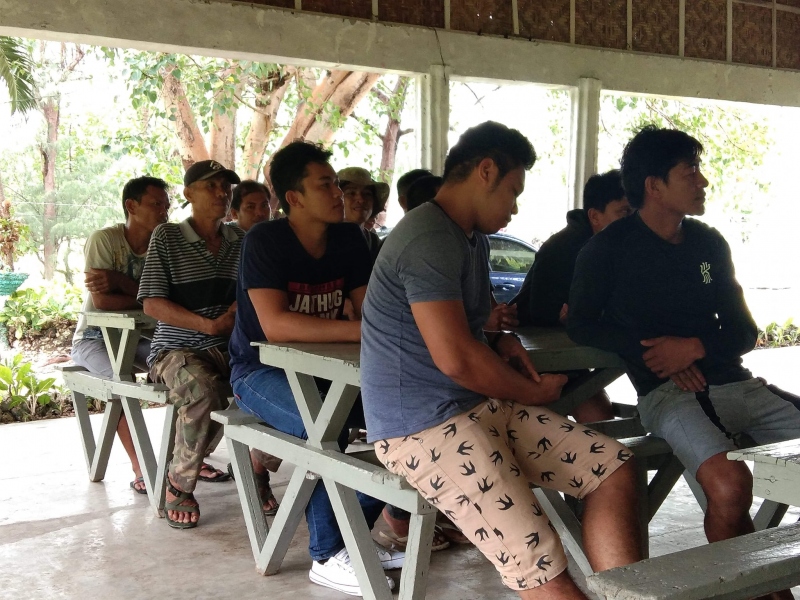
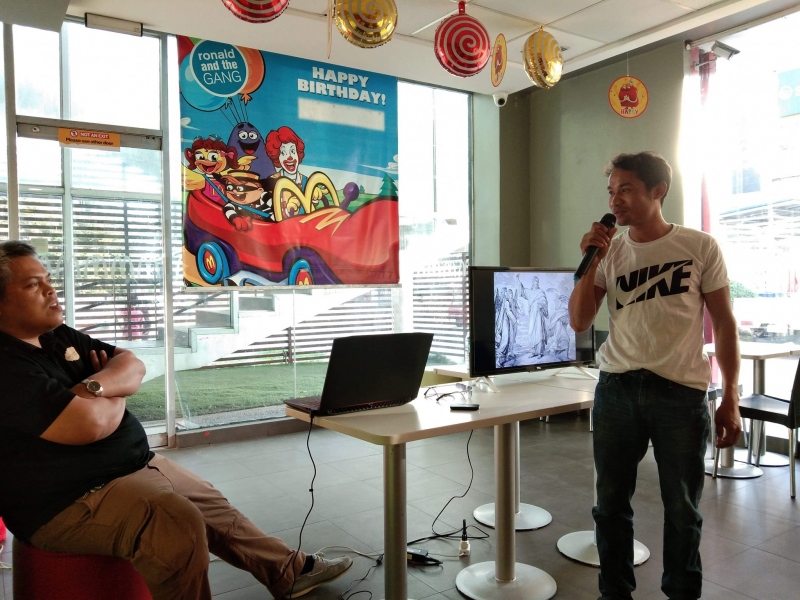
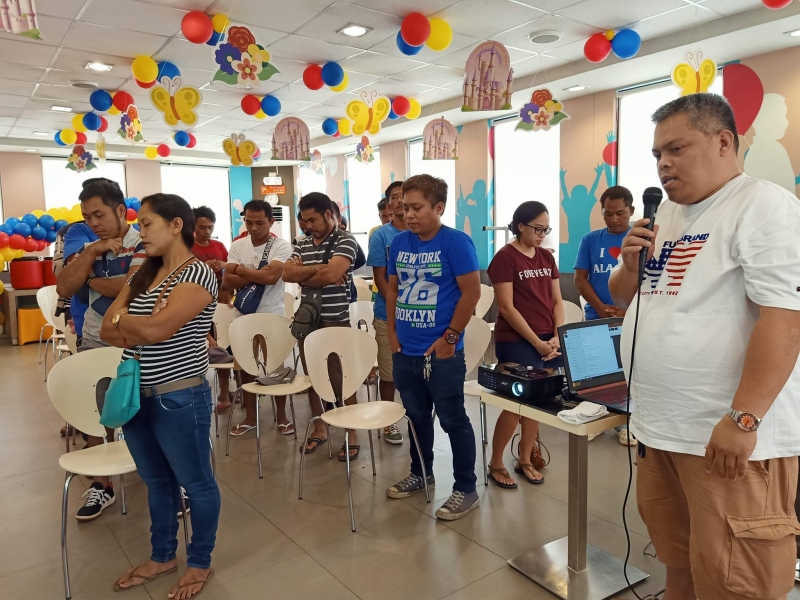
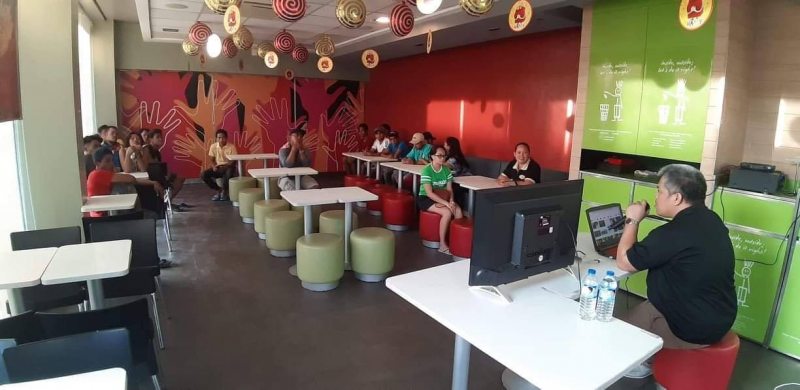
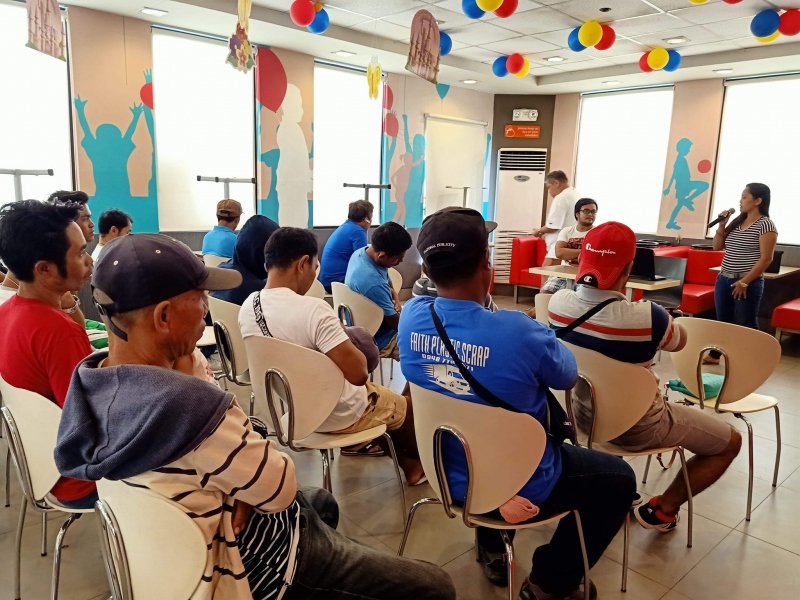
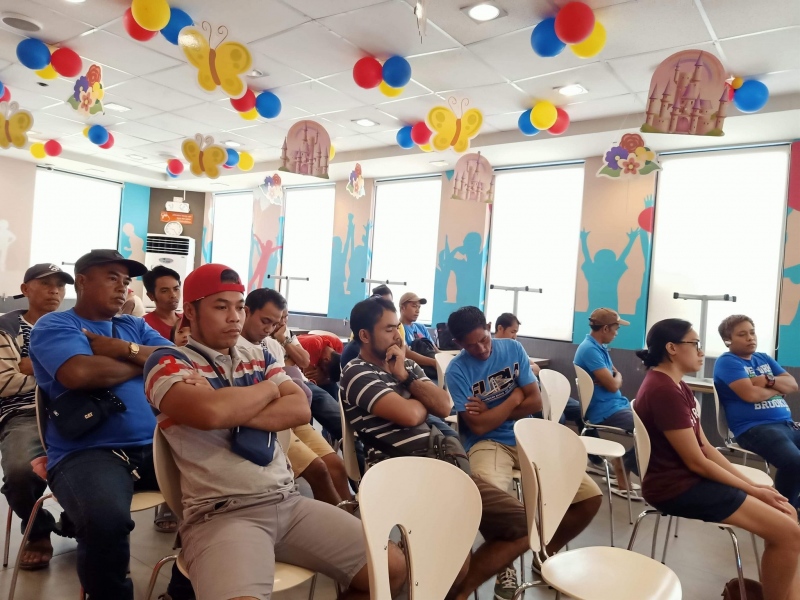
Teaching the workers things that matter more in life is every steward’s obligation to God. If you’ve been given people to steward such as in a work organization setting, you should always find time to teach them things that are more important than just money or work. The reason that you are in the position of being the leader in your organization might be because God is calling you to do just that – so you can teach your people.
Finding time for teaching the workers should be within work time. This is because workers value their time – especially for workers who live far from the workplace – as they need time to travel. Also, you will have more authority in your teaching if you’re paying them for their time listening to what you teach.
NOTE: Please do Check your SPAM Folder for the confirmation link after you submit your email in case you can't find it in your inbox. Sometimes it does land in the spam box....
To provide the best experiences, we use technologies like cookies to store and/or access device information. Consenting to these technologies will allow us to process data such as browsing behavior or unique IDs on this site. Not consenting or withdrawing consent, may adversely affect certain features and functions.
Functional
Always active
The technical storage or access is strictly necessary for the legitimate purpose of enabling the use of a specific service explicitly requested by the subscriber or user, or for the sole purpose of carrying out the transmission of a communication over an electronic communications network.
Preferences
The technical storage or access is necessary for the legitimate purpose of storing preferences that are not requested by the subscriber or user.
Statistics
The technical storage or access that is used exclusively for statistical purposes.The technical storage or access that is used exclusively for anonymous statistical purposes. Without a subpoena, voluntary compliance on the part of your Internet Service Provider, or additional records from a third party, information stored or retrieved for this purpose alone cannot usually be used to identify you.
Marketing
The technical storage or access is required to create user profiles to send advertising, or to track the user on a website or across several websites for similar marketing purposes.






Feedback